• Alex’s Lecteur and Maitre de Langue Job Board for 2026-2027

    Lecteur and Maitre de Langue jobs for 2026-2027

    Welcome! Please find below all Lecteur or Maitre de Langue job listings I come across for the school year 2026-2027. To learn more about the requirements of this kind of post, check out my other blog post about the positions here. All of these positions will allow you to get a 1 year visa to work legally in France, with a possibility to extend to a 2nd year.

    Most of these positions are English teaching positions, but some include other languages like Spanish, Italian, German, Chinese, Japanese, Russian, or Arabic as well. Make sure to check the deadline for each job, as well as where the job is located. Most jobs require a cover letter (lettre de motivation), CV (resume), a copy of your diploma, and a copy of your passport. Best of luck!

    Universite de Lorraine (Nancy and Metz Campuses)

    The University of Lorraine, which has campuses both in Nancy and in Metz, is looking for 2 English lecteurs with a deadline of April 20th. They are also looking for 7 English lecteurs with a deadline of May 1st, 1 with a deadline of April 30th, and 1 with a deadline of May 12th. For English maitre de langues, they are looking for 1 English maitre de langue with a deadline of April 19th, and another with a deadline of April 30th, and 2 more with a deadline of May 3rd. They are also looking for 2 Russian lecteurs (may 1st deadline), 2 Spanish lecteurs (May 1st deadine), an Italian lecteur (May 9th deadline), and 2 German lecteurs (May 1st deadline for one and May 12th deadline for the second). For more information on which campus these posts are for, more information, and to apply, click here. I taught at this university at the Metz Campus, and liked it a lot.

    Universite de Reims Champagne-Ardenne

    The university of Reims (pronounced ‘rahnse’) Champagne-Ardenne is looking for 1 English lecteur. Deadline is May 2nd. To learn more and apply, click here.

    Universite de Toulon

    The University of Toulon is looking for 2 maitre de langues in English and 1 in Spanish. Deadline is April 27th at 4pm Paris time. For more information and to apply, click here.

    Universite de Bordeaux

    The University of Bordeaux is looking for 1 lecteur for Legal Spanish and 1 lecteur for English in AES (social and economic administration, but also eventually legal English). They are also looking for 3 English lecteurs for their department of the science of man, and 1 for the department of science and technologies. Deadline for all posts is April 23rd. For more information and to apply, click this link.

    Universite Jean-Monnet a Saint-Etienne (deadline passed)

    The University of Jean-Monnet in Saint-Etienne (southwest of Lyon) is looking for 3 English lecteurs and 1 Spanish lecteur. Deadline is April 6th at 12 noon Paris time. To learn more about the positions and apply, click here.

    Universite de Paris Cite

    The University of Paris Cite is looking for 2 lecteurs of English. Deadline is April 17th. To learn more about the posts and apply, click here for post 1 and here for post 2.

    Universite de Perpignan

    The University of Perpignan’s English department is looking for an English lecteur. Deadline is May 3rd. For more information or to apply, email M. Olivier Simonin here: olivier.simonin@univ-perp.fr. To apply, they require a CV in English or French + a cover letter in French.

    Universite Gustave Eiffel (Paris)

    The University of Gustave Eiffel’s department of language, culture, and society is looking for an English lecteur. Deadline is April 17th. To apply, send an email to Michele Draper here: michele.draper@univ-eiffel.fr

    Sorbonne Universite (Paris) (deadline passed)

    The Sorbonne University is looking for 8 lecteurs and 9 maitre de langue teachers for different languages. For lecteur, they are looking for 1 Portuguese, 2 Spanish, 1 Catalan, 1 English studies, 1 Dutch, 1 Italian, and 1 Russian lecteur. For Maitre de Langue, they are looking for 3 English, 1 English literature and studies, 1 Norwegian, 1 Italian, 1 Russian, 1 Bosnian/Croatian/Montenegran/Serbian, and 1 Chinese. Deadline is April 1st midnight Paris time. To learn more and apply, click here.

    Universite de Tours (deadline passed)

    The university of Tours’s department of law and foreign languages is looking for an English lecteur. The deadline is April 9th. For more information and to apply, click here.

    Universite de Strasbourg (deadline passed)

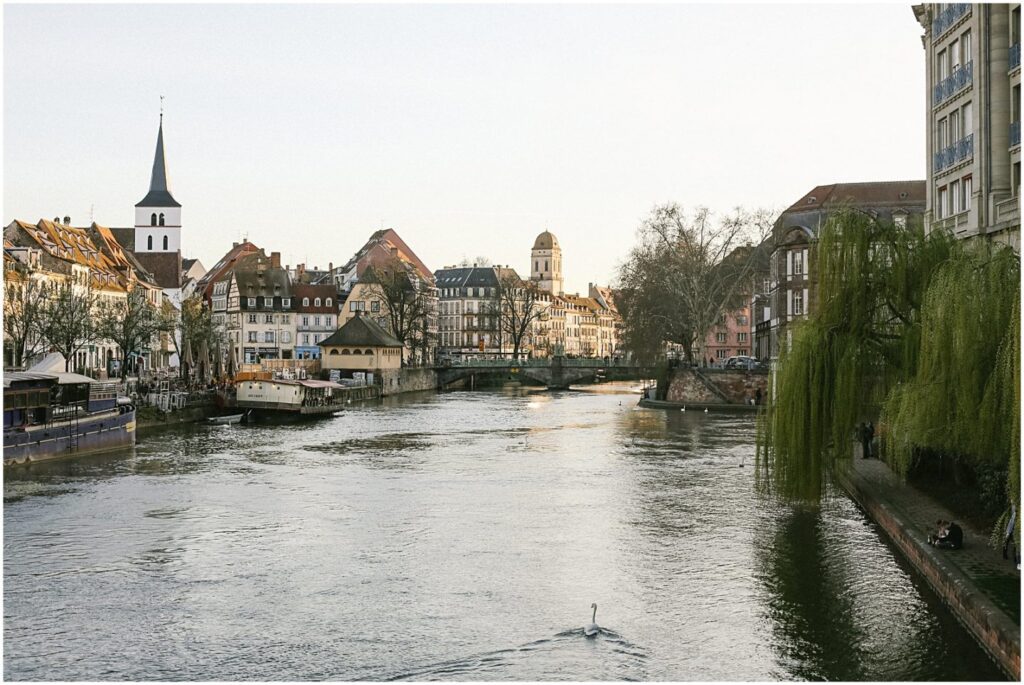
    The University of Strasbourg’s Department of English Studies is looking for an English lecteur to teach both LANSAD and LLCER students. Deadline is April 10th. To apply, click here. I taught at this university and greatly enjoyed it, Strasbourg was one of my favorite cities 🙂

    Universite de Pau et des Pays de l’Adour (Deadline passed)

    The university of Pau is looking for 2 lecteurs of English. Deadline is March 27th at 4pm. For more information and to apply, click here. I taught here at the Bayonne campus, and greatly enjoyed it. Being by the Atlantic and so close to Spain is fantastic, and the Basque culture is very cool too.

    ENS de Lyon (Deadline passed)

    The ENS (Ecole Normale Superiore) of Lyon is looking for 2 English lecteurs, and 1 Maitre de Langue in each of the following languages: English, Arabic, Spanish, Italian, Portuguese, and Russian. To apply, there are 2 stages. First, pre-apply, deadline is March 12th at 4pm Paris time. Next, once you create an account in their system, apply properly by March 16th at 4pm Paris time. For more details and to apply, click here.

    Universite Paris 1 Pantheon Sorbonne (Deadline passed)

    The University of Paris 1 Pantheon Sorbonne is looking for 3 Maitre de Langues in English, 1 in Chinese, 1 in Russian, and 1 in Italian. Deadline is March 11th at 5pm Paris time. For more information and to apply via email, click here.

    Universite Sorbonne Paris Nord (Deadline passed)

    The university of Sorbonne Paris Nord, in the north of Paris, may be looking for several lecteurs for the 2026-2027 season. Deadline is Wednesday March 11th at 4:30pm Paris time. To apply via email and learn more, click here.

    Universite Marie & Louis Pasteur (Deadline passed)

    The university of Marie & Louis Pasteur, located in Besancon, is looking for 4 lecteurs in English. Deadline is March 25th. To apply by email and for more information, click here.

    Sciences Po Lille (Deadline passed)

    The university of Sciences Po Lille is looking for 1 maitre de langue to teach English language and English civilizations. For more information and to apply by email, click here. Deadline is March 16th

    Universite d’Angers (Deadline passed)

    The university of Angers is looking for an English lecteur. Deadline is March 15th. For more information and the email to apply, click here.

    INSA Hauts-de-France (Deadline passed)

    This university located in Valenciennes (north of France) is looking for 2 lecteurs for English. Deadline is March 17th and March 18th. For further info on application materials and the email to apply, click here for the first post, and here for the second post.

    Aix Marseille Universite (Deadline passed)

    The university of Aix Marseille is hiring lecteurs for the following languages: Japanese (1), Chinese (1), Italian (2), English (4), and Russian (2). They’re also hiring 1 Maitre de langue in English. This is a particularly short hiring window of only 12 days. Deadline is February 14th. To apply, click here.

    Universite de Montpellier Paul Valery

    The university of Montpellier Paul Valery is looking for 1 contractual English teacher, Deadline is March 29th, and the following lecteurs: 1 lecteur for the Portuguese language (Deadline is March 30th), 2 lecteurs for Spanish (Deadline is May 15th), and 1 lecteur for English (Deadline is May 3rd). To apply, click here.

    Universite de Toulouse Jean Jaures (Deadline passed)

    The University of Toulouse Jean Jaures has opened its recruitment process to applications. This university is known to post its positions earlier than most other universities in France. Last year they recruited 8 English lecteurs, and this year the number of new lecteurs they are hiring is unclear, but they are open to receiving applications for lecteurs of the following languages: English, Arabic, Chinese, Korean, Spanish, Italian, Japanese, Portuguese from both Brazil and Portugal (2 separate posts), and Russian. They’re also hiring a Maitrede Langue for Italian. Deadline is March 13th at 4pm Paris time. To apply, click here.

    Universite de Bordeaux Montaigne (Deadline passed)

    The university of Bordeaux is hiring a total of 35 lecteur positions in variety of different languages for the 2026-2027 year. Languages include Spanish (5 posts), English (13 posts), Portuguese (2 posts), Italian (2 posts), Russian (2 posts), German (1 post), Arabic (1 post), Chinese (4 posts), Japanese (4 posts), and Korean (1 post).

    Applications open January 14th, deadline is February 11th at 4pm Paris time. These posts include those that can be renewed with current lecteurs, so there may actually be less positions than there appears to be. For more information and to apply, click here.

    Universite de Paris Nanterre (Deadline passed)

    The university of Paris Nanterre is hiring both lecteurs and maitres de langue for 2026. For lecteur positions, languages include English (1 post), Portuguese (2 posts), and Russian (1 post). For maitre de langue, languages include German (3 posts), English (13 posts), Arabic (2 posts), Chinese (1 post), Spanish (5 posts), Italian (1 post), and Russian (2 posts).

    They university is also hiring at their satellite campus, the IUT Ville D’Avray. Languages are just English (1 post at the Ville D’Avray site, and 1 post in the Saint-Cloud site).

    Applications opened January 7th, the deadline is February 11th at 4pm Paris time. For more information and to apply, click here.

    Universite de Strasbourg – IUT Robert Schuman (Deadline passed)

    The IUT campus of the university of Strasbourg is hiring 1 English lecteur for 2026. Note, this post is for young native english speakers, ideally with a bit of teaching experience in the lycee or college settings (high school or middle school). It’s not for candidates with a lot of experience. The post lasts 2 years, teaching 10-14 hours a week. To apply, send a resume and cover letter to Mr. Cormac Chester at chester@unistra.fr. Deadline is February 28th. I taught at this university and greatly enjoyed it, Strasbourg was one of my favorite cities 🙂

  • Alex’s Lecteur and Maitre de Langue Job Board for 2025-2026

    Lecteur and Maitre de Langue jobs for 2025-2026 (updated 22nd of June 2025)

    Welcome! Please find below all Lecteur or Maitre de Langue job listings I come across for the school year 2025-2026. To learn more about the requirements of this kind of post, check out my other blog post about the positions here.

    Most of these positions are English teaching positions, but some include other languages like Spanish, German, Chinese, Russian, or Arabic as well. Make sure to check the deadline for each job, as well as where the job is located. Most jobs require a cover letter (lettre de motivation), CV (resume), a copy of your diploma, and a copy of your passport. Best of luck!

    Universite d’Orleans (Deadline passed)

    This university is offering both lecteur and maitre de langue positions. They begin acception applications on March 29th, and the deadline is April 29th at 4pm. To apply you’ll need an application sheet, cover letter, resume, passport, and diploma.

    Link

    Universite de Strasbourg (Deadline passed)

    The University of Strasbourg is looking for both Maitre de Langue and Lecteur teachers to teach English, Russian, Spanish, and Chinese. I worked at this University (different department) as a Maitre de Langue anglais and loved it. The deadline is March 30th at midnight. You’ll need a resume and coverletter in both French and English to apply.

    Link

    Universite Polytechnique des Hauts-de-France (UPHF)

    UPHF in Valenciennes is looking for a lecteur in English. To apply you’ll need a resume in either French or English, and a cover letter. Deadline hasn’t been posted.

    Link

    Universite de Perpignan (UPVD)

    The University of Perpignan is looking for 2 English lecteurs. They don’t specify what they’ll need to apply (probably a resume and coverletter at least) but provide a few emails to contact and learn more. Deadline hasn’t been posted.

    Link

    Universite Lyon 3 Jean Moulin (Deadline Passed)

    The University of Lyon 3 Jean Moulin is looking for a Maitre de Langue in English, and Lecteurs for the languages of English, Arabic, Chinese, Korean, Hindi, Italian, and Russian. You will have to apply directly on their portal. Deadline is March 26th at 4pm Paris time.

    Link

    Universite Paul Valery Montpellier (Deadline Passed)

    The University of Paul Valery in Montpellier is looking for an English lecteur and two Spanish lecteurs, as well as a contractual English teacher. The deadline to apply for the English lecteur is March 30th, for Spanish is May 15th, and for the contractual is by March 23rd.

    Link

    Universite La Rochelle (Deadline Passed)

    The University of La Rochelle is looking for a maitre de langue of Indonesian and a contractual of English. Deadline to apply for both are March 21st.

    Link

    Universite de Picardie Jules Verne (UPJV) (Deadline Passed)

    The University of Picardie Jules Verne in Amiens is looking for 4 English lecteurs. To apply you’ll need a resume, cover letter, photo ID, diploma with translation, and a certificat sur l’honneur. Deadline is for April 4th.

    Link

    Universite de Franche-Comte (Deadline Passed)

    The University of Franche-Comte Marie et Louis Pasteur is looking for 4 English lecteurs. To apply you’ll need a resume and coverletter in both English and French, deadline is April 14th.

    Link

    Universite de Toulon (Deadline Passed)

    The University of Toulon is looking for 1 lecteur and 1 maitre de langue of English. To apply, you’ll need to create a profile and apply on their website. You’ll need your passport, resume, cover letter, and diploma with translation. Deadline is April 16th.

    Link

    Aix-Marseille Universite

    The university of Aix-Marseille is looking for 9 lecteurs of English. To apply you’ll need your passport, resume, cover letter, diploma and translation of diploma. Deadline hasn’t been posted.

    Link

    Universite de Lorraine (Deadline Passed)

    The University of Lorraine is looking for 2 native English, 2 native Spanish, and 1 native Italian lecteur for next school year. To apply you’ll need a resume, cover letter, diploma, and letter of recommendation (in either French or English). I taught at the University of Lorraine and greatly enjoyed working with them. The campus is split between two cities, Nancy and Metz. I lived and taught in Metz, but visited Nancy often and it’s also a great city. Deadline is May 10th.

    Link

    Universite Jean Monnet Saint Etienne (Deadline Passed)

    The University of Jean Monnet Saint Etienne (near Lyon) is looking for 2 English lecteurs and 1 Spanish lecteur. To apply you’ll need a CV and cover letter in French, as well as diploma and photo ID. Deadline to apply is April 25th.

    Link

    Universite de La Reunion (Deadline Passed)

    The University of La Reunion is looking for an English lecteur. Note, this university is on the small island of La Reunion, off the coast of Madagascar in the Indian Ocean. La Reunion is a French territory outside of Metropolitan France. Deadline is April 25th.

    Link

    Pantheon Sorbonne Universite Paris 1 (Deadline passed)

    The University of Pantheon Sorbonne Paris 1 is looking for 6 English, 2 Italian, and 1 Russian Maitre de Langues. Deadline is June 3rd. You’ll need a CV, Motivation letter, diplomas and passport.

    Link

    Universite de Lille (Deadline passed)

    The University of Lille is looking for 4 English lecteurs. Deadline is May 26th.

    Link

    Universite de Grenoble (deadline passed)

    The University of Grenoble is looking for 1 English and 1 Russian lecteur. Deadine is May 26th.

    Link

    Universite Polytechnique Hauts-de-France

    The Polytechnic university in Hauts-de-France is looking for a contractual English teacher in the Unite Academique Lettres Langues Arts department. Deadline is July 7th.

    Link

    Sorbonne Universite

    Sorbonne University is looking for an English contractual teacher to join their language department and teach English in the Sciences field. Deadline is June 27th.

    Link

  • Thinking about Moving to France after the US Election?

    You’re not alone. After the 2016 US election, I moved to France in 2018 and never looked back.

    I was there in the Javits center in 2016 when Donald Trump won the election, and it shocked the nation. I remember finally giving up and going home at 11pm, along with everyone else. I remember the sadness, despair, and fear I felt waking up in the middle of the night finding out that he actually won.

    Living in Washington DC while Trump was president.

    I was living in New York City at the time, with plans to move to Washington DC to teach English as a Second Language (ESL). I was excited about the idea of potentially teaching students from around the world English with the first American female president just a short walk away in the White House.

    Instead, I ended up teaching for over a year there with Trump in the White House. And the only time I was excited about that was during the Robert Mueller investigation in 2017. I thought he might have some consequences for his actions when he dismissed James Comey. Boy, was I wrong.

    Making the first step towards moving abroad to France.

    In 2018 I was already looking for jobs to teach abroad. I had even applied to be an English Language Fellow with the state department, when my alma mater (Columbia University) forwarded me a job posting about a position at the university of Strasbourg in France. It was for a yearlong ESL position teaching undergrad and masters students in France. Since I was fluent in French and had lived in France before (6 years from the ages of 5 to 11), I felt this was the perfect opportunity.

    I applied and before I knew it, I was offered the position of Maitre de Langue in the end of April 2018. I got married with my then-girlfriend, whom I was living with at the time, and we packed our bags and moved to France that August!

    Teaching English in France positions are open every year!

    I didn’t know then that I was about to begin a whole new life here in France. Turns out that there are positions open in most universities here every year to teach ESL, all across France!

    The most common position is the Lecteur de Langue Anglais, which many can apply for with just a 4-year bachelor’s degree. The Maitre de Langue position, however, requires 1-2 years of a Master’s degree depending on the university.

    Experiencing a better quality of life in France.

    I had already been interested in teaching and living abroad, but the disappointing election result was a strong factor in getting me to finally pursue it. So in a sense, I can say that I’m grateful that I finally got that push.

    Since moving to France, I’ve noticed my quality of life go up exponentially.

    The food I eat is fresher, healthier and more affordable. Wine and beer is more affordable, and of higher quality. And both the drinking and eating culture here is to enjoy, not to overconsume.

    Healthcare is universal and incredibly affordable (40 dollars for a dentist visit without insurance!)

    I can take high-speed trains to different countries with different foods, cultures, and languages.

    People also have a slower pace of life here in France in general. Places are often closed on Sundays, meaning it’s a day to actually relax. And people take their time eating outdoors in terraces or cafes, in pedestrian-only streets surrounded by beautiful architecture built many centuries ago.

    Wanting to share my path with others, so they can follow it too.

    That’s a big part of what inspired me to create this blog, website, courses, e-book, and consulting services. It’s all different branches of the same idea, which is to help others Move to France and Teach English. Because I believe living in France can really improve your quality of life, no matter where you’re living, but especially if you’re in a country where someone like Trump is president.

    So whether you want to read on your own with my blog or e-book, take a course with tips to learn on your own, or book my consulting services to have one on one support specially tailored to your situation, know that there are always jobs in France teaching ESL every year.

    And these French universities need your help.

    They need native English speakers who are passionate about teaching. Who want to live in France and speak French. And who want to share about the culture of their English-speaking home country.

    You have the power to change your circumstances. So come to France!

    So if you’re feeling down with Donald Trump’s election for another four years, and you think you don’t have a choice, remember: You can always come to France and Teach English, and improve your quality of life.

    It doesn’t even have to be permanent! You can come here for 2-4 years and then move back, or continue on to somewhere else in Europe. The point is, you have the power to change your circumstances, where you live, what you do, and how you make an impact. Always.

    As the French say, bon courage!

  • Side Jobs: Working Part Time in France

    Making use of your time off

    Working as an English Teacher at a university in France, teaching classes or workshops, can be a really great job. If you’re working as a Maitre de Langue or Lecteur de Langue Anglais, you can definitely have a lot of work on your plate during the semesters (particularly the months of October-November and February-March!). However, during other semesters, the workload might be lighter. And then come April, May, or even June, you will finish most of your classes, and you’ll have a lot of free time on your hands, where the only work to do is grade papers or proctor exams!

    So the question is, what do you do with all that free time?

    Well, one option is to take on a side job and find yourself working part time in France!

    Knowing what you can and can’t do

    Many don’t know this, but although the lecteur and maitre de langue jobs are considered “full time”, this simply means you can’t take on any other full time work. This is the case even if the university is closed for July or you don’t have any classes left in June.

    However, you are allowed to do a certain number of additional hours per year as part-time work. Sometimes you may need an auto-entrepreneur status to do the work. However, if you’re working with a French company to do this part time work and you’ve given them your French social security number (as is the case with the public univerisites), they’ll deduct the taxes from your paycheck automatically and you won’t need an auto-entrepreneur status at all!

    Working part time in Strasbourg

    If you’re in France and want to find additional work, especially in Strasbourg, one company I recommend is called Stras’Cours. I worked with them mostly in person, but they also do some online work with English teachers. You can have either auto-entrepreneur status if you don’t already have a full time job, or if you have a full time job you can just add on the additional hours with them.

    Working part time in France with a French company

    Another company I’ve worked with online is called Wissen International. While mostly working in person and requiring a car, this company switched to providing online Business English classes to their clients shortly after the pandemic. I’m fairly sure they still offer both in person and online, but either way, they’re a good way to make some supplemental side income teaching English.

    Working part time with an International company

    And finally, one of my favorite websites to teach English online is Twenix. Although I haven’t taught with them personally, they provide a syllabus with courses to teach so you don’t have to do any of that work! Let me tell you from experience, after working with both Stras’Cours and Wissen International, figuring out what to teach every week was the majority of the work I had to do. Twenix provides lesson plans, plus you’ll have no homework to mark, because all classes are conversation-based and all the materials are provided. Students actually do homework exercises on the platform itself from a bank of reading, listening and grammar activities.

    Twenix also is completely flexible, so you can choose when and for how long you want to teach, and can even modify your schedule or transfer classes to other available teachers if something comes up later and you can’t teach a certain class! They hire native and non-native teachers from all over the world, so you don’t have to have EU citizenship you could be from anywhere. You also don’t need a degree, TEFL certificate, or experience to work with us.

    Because Twenix has such an attractive hiring policy, working with them would be a great place to get teaching experience on your resume if you’re applying for those competitive lecteur or maitre de langue jobs and you already have a degree, but not much experience teaching ESL directly.

    Whichever company you end up working with, I highly recommend working part time in France, teaching English as a second language to hone your craft, get experience, and earn a bit of side money for traveling or saving.

  • Learn How to Get a Job Teaching English in France

    Have you dreamed of leaving the United States and moving to France to teach English?

    Is the idea of getting a job abroad in Europe tiresome and confusing?

    If you’re like me, the idea of applying for a job in France and going through the interview process is overwhelming.

    Maybe you don’t know where to find a good teaching job that pays well, or how to get a work visa in France that allows you to work there in the first place.

    These are all valid concerns. And I’m here to help guide you through the process step-by-step.

    After living in France for over five years and teaching at four different universities, I’ve become a pro at getting a job teaching English in France.

    Turns out, it’s not as difficult as you think

    You might think there are no jobs available to foreigners that provide work visas.

    But actually, there are tons of foreigners hired every year as English teachers for well-paying, stable jobs at the university level.

    Perhaps you might think that even if there are jobs like that, that you’re not qualified to apply.

    You’d be surprised!

    In fact, if you have a university degree and a basic understanding of French, moving to France is a lot easier than you’d think.

    If you’re a native English speaker, you’re already highly qualified.

    While teaching experience is a big plus, surprisingly, it isn’t as important a requirement as having a Bachelor’s or a Master’s degree.

    Your major is also not as important as you’d think.

    Not having majored in French or English can actually be an advantage.

    Why? Because if you’re teaching English to business students, then your lessons should cover business topics, for example. The same goes for engineering, biology, law, environmentalism, sports, and other subjects.

    So, how do you get a job teaching ESL in France?

    Because France is such an in-demand place to live, and will continue to be in the long-term, applying and securing these jobs teaching English at the university level isn’t easy. You’ll have a lot of competition!

    That’s where I come in: Hi, I’m Alex!

    With over five years of experience living in France as an expat from the United States and a close first-hand knowledge of the regions and universities here, I break down all the steps you have to take to put your best foot forward and maximize your search and candidacy for these jobs.

    Most people who apply to these jobs apply blind, without any help, and are lucky if they get a job offer.

    Introducing my Teach English in France course!

    In this easy-to-digest online course you’ll walk away knowing how to….

    • Identify the best English teaching jobs for you (and where to find these coveted jobs)
    • Organize your job search simply and create a solid game plan
    • Navigate the job application process with ease
    • Interview successfully and know all of the questions in advance (trust me, I’ve been asked them ALL!)
    • Write a winning cover letter and resume (adapted to the preferred French system!)

    No more job search stress and overwhelm!

    This process can be easy. With my guidance and insight, you’ll be feeling excited and confident to land English teaching contracts and move to France.

    Plus, there’s no gatekeeping here! I’m here online to share everything I’ve learned after five years, countless interviews, 9 university job offers and 4 different university contracts.

    5 years of trial-and-error, so you don’t have to.

    This Online Evergreen Course is

    • Self-paced
    • Never expires! You’ll have the content forever.
    • 4 video modules (20-30 minutes, 2 hours total – No content / information overwhelm!)

    oNE-TIME PAYMENT OF $97

    Ready to Move to France and Teach English?

  • Do the French Celebrate Halloween?

    If you live in the United States or Canada where Halloween can be rather ubiquitous, you might wonder: do the French Celebrate Halloween? The short answer is yes, the French celebrate Halloween, but it’s not as important as the following day: November 1st.

    What’s La Toussaint?

    La Toussaint, or All Saint’s Day, is a very important holiday to the French, and one that belies a much deeper, more meaningful series of traditions than asking for candy and donning a costume.

    Often connected with All Soul’s day on November 2nd, schools across France always have the entire week off whichever week November 1st falls on. This is their fall break, which is about a month earlier than fall break in the US which falls on Thanksgiving (a holiday that doesn’t exist in France).

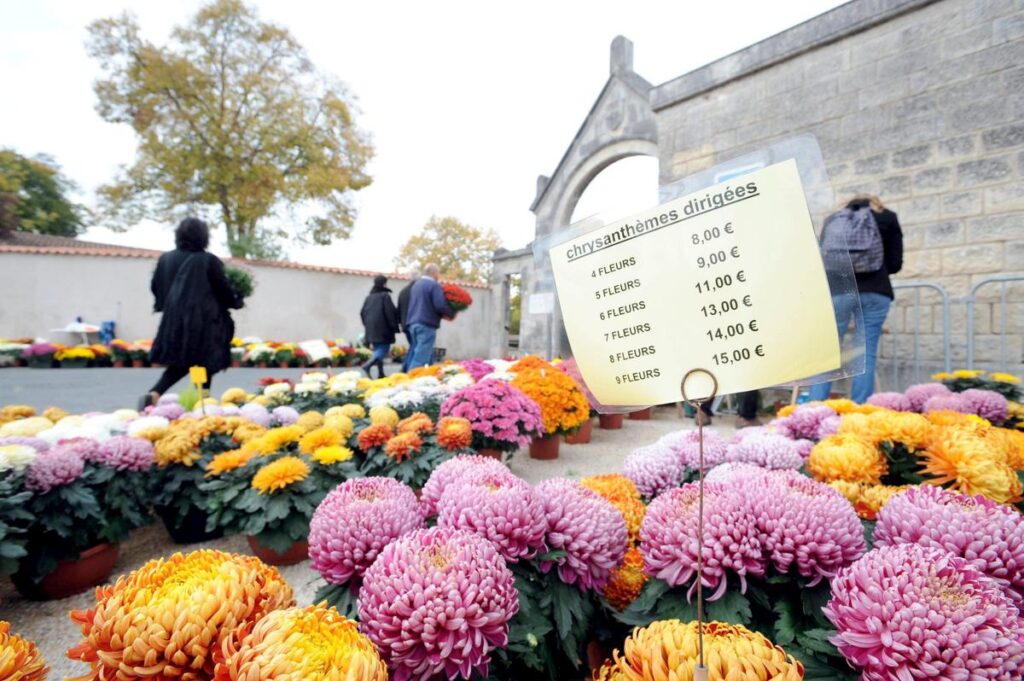
    Photo credit: Xavier Leoty

    For La Toussaint, it’s typical to visit a cemetery to see and pay respects to those who have passed away. An estimated 200,000 people in Paris alone were estimated to have visited a cemetery on Toussaint last year.

    What other traditions for La Toussaint are there?

    Another tradition is to leave chrysanthemum flowers on graves of loved ones. Why chrysanthemums? Well, for one, the flower blooms in the fall and survive better at cooler temperatures. But also, the tradition began after the first world war when the French president at the time called on the people to decorate the tombs of the fallen with these flowers.

    Candles are lit too, and left at the graves, to help the souls find their way from All Hallow’s eve (Halloween) to All Soul’s Day (November 2nd). In some regions of France, like Corsica, chestnuts are roasted and left at the tombs as well.

    How do they French feel about Halloween?

    The French have a love/hate relationship with Halloween specifically, depending on who you ask. Many young people like the tradition, the sweets and the costumes, and Trick or Treating (“Un bonbon ou un sort!”) has even spread to many places in France, as a fun tradition for children and adults alike. Even haunted houses and zombie marathons have caught on, too.

    But not everyone in France likes Halloween. Some see it as encroaching on November 1st’s Toussaint. Robert Rochefort, who worked at CREDOC (a center for the research and study of life conditions), had this to say about Halloween:

    “We thought putting something artificial and orange could hide something more essential, and today it’s coming back: the desire to reflect on the meaning of life.”

    Robert Rochefort, CREDOC

    Peaking in popularity in the early 2000s, Halloween has since diminished a bit, but is still marketed by candy and chocolate companies here in France.

    My thoughts on Halloween

    As an American who never thought about the dead for Halloween other than the characters in scary movies or the costumes people wore for Halloween, I can see why the French would want to protect the importance of respecting those who have gone, to not forget them.

    But can’t we do both? I love Thanksgiving and giving thanks for what we have, but I also personally love Halloween and the fact that I always get a whole week off during this time. Why not celebrate Halloween, with all the fun costumes, chocolates, candies, trick or treating, pumpkins and decorations? A day and night of fun, followed by a morning and day of solemn sobriety and reflection on life and those who have passed. And then an extra day, November 2nd, for all soul’s day to continue to do so. Seems like the best of both worlds to me.

    What do you think about Halloween, All Saint’s Day, and All Soul’s Day? Let me know in the comments below.

  • Why France is the New American Dream

    When I’m asked where I live, answering is hard

    Whenever I go back home to the United States and people ask me where I live, it’s hard not to say the answer without sounding pretentious or bragging. This is because the truth, living in France, is often something that many Americans can only dream of. It certainly was a dream of mine while in college and shortly after graduation. In today’s post, I am going to try to explain why France is the new American Dream.

    A Popular Destination

    According to the New York Times, Europe was the most popular destination for Americans this summer, and France was one of the top destinations for Americans who did come to Europe. I’ve definitely started witnessing Americans traveling everywhere this year, as COVID rates have lessened and they have been able to travel abroad again.

    But why France specifically? What does France have that the US doesn’t?

    France is the light of the world. Her genius is to light up the universe.

    -Charles de Gaulle

    What Europe Means to Americans

    “For centuries, and no matter how much it has changed, Europe, for us, has meant art and architecture, science and philosophy, fashion and fame, sex and perfume — and some connection to the past that, in an unbridgeable way, is unavailable to us back home” writes Benjamin Moser for the New York Times.

    Why France is Special to Me

    While France has definitely been a dream for many a francophile studying it in high school or college, for me, France has always been something more. When I was five years old I moved to Paris with my family, where I attended an American University. For six years my childhood consisted of having croissant with scrambled eggs, baguette with frosted flakes, and coming home from my American school to get my daily dose of French culture on TV.

    France isn’t just a dream for me, it’s part of my identity. My story, my upbringing. Which is why coming back to France for work with my wife felt like a homecoming of sorts.

    Experiencing France a Different Way

    But in other ways it felt completely different. The French experience as a tourist, or as a child, was completely different from the French experience as an expat living and working in France. When I was here before it was my parents arranging everything and taking care of me. This time around it was me taking care of myself and my wife, an American who had no real prior experience of France or knowledge of the French language.

    I spent a total of twelve years of my childhood living in Europe, returning to the US only for holidays to see family. They call us Third Culture Kids — children who have one nationality or culture, but grow up in a second nation or culture, resulting in a third culture that’s a mix of the two cultures and countries which shape our identity.

    Experiencing culture shock, twice

    So my first real culture shock was coming back to the United States and learning what being an American actually meant. All my life I thought I had been an American, but spending my first year at a community college in New Jersey taught me that because I hadn’t grown up watching all the same TV shows, eaten the same food, and gone to the same malls as my classmates, that I was actually “The European.”

    My second culture shock was returning to France as an American and learning what it really means to be French, something I learned I never really learned in my childhood in the first place. It wasn’t until I became a sophmore in an American University in the US that I developped an interest in politics and economics.

    French things I appreciated as an American

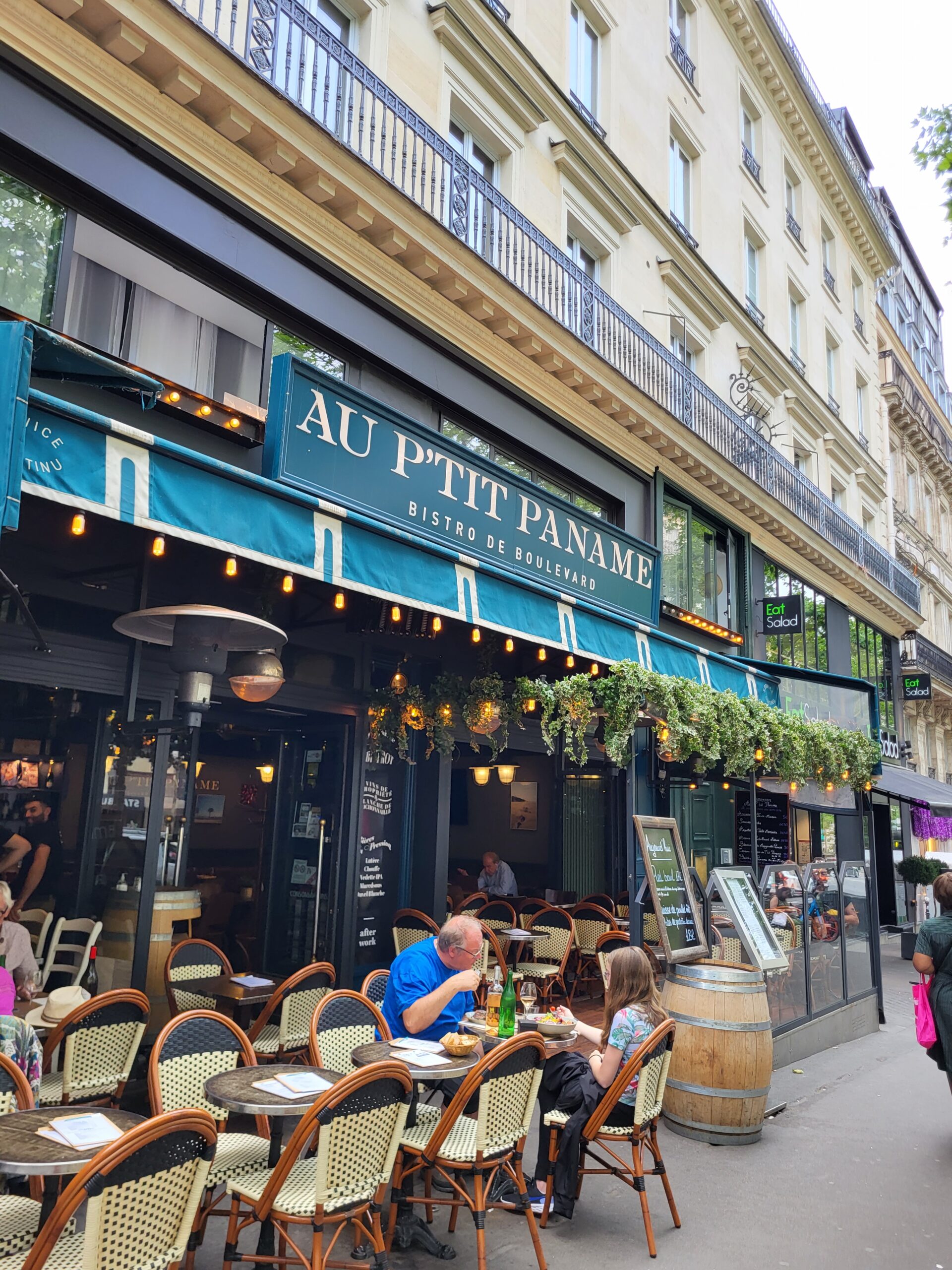
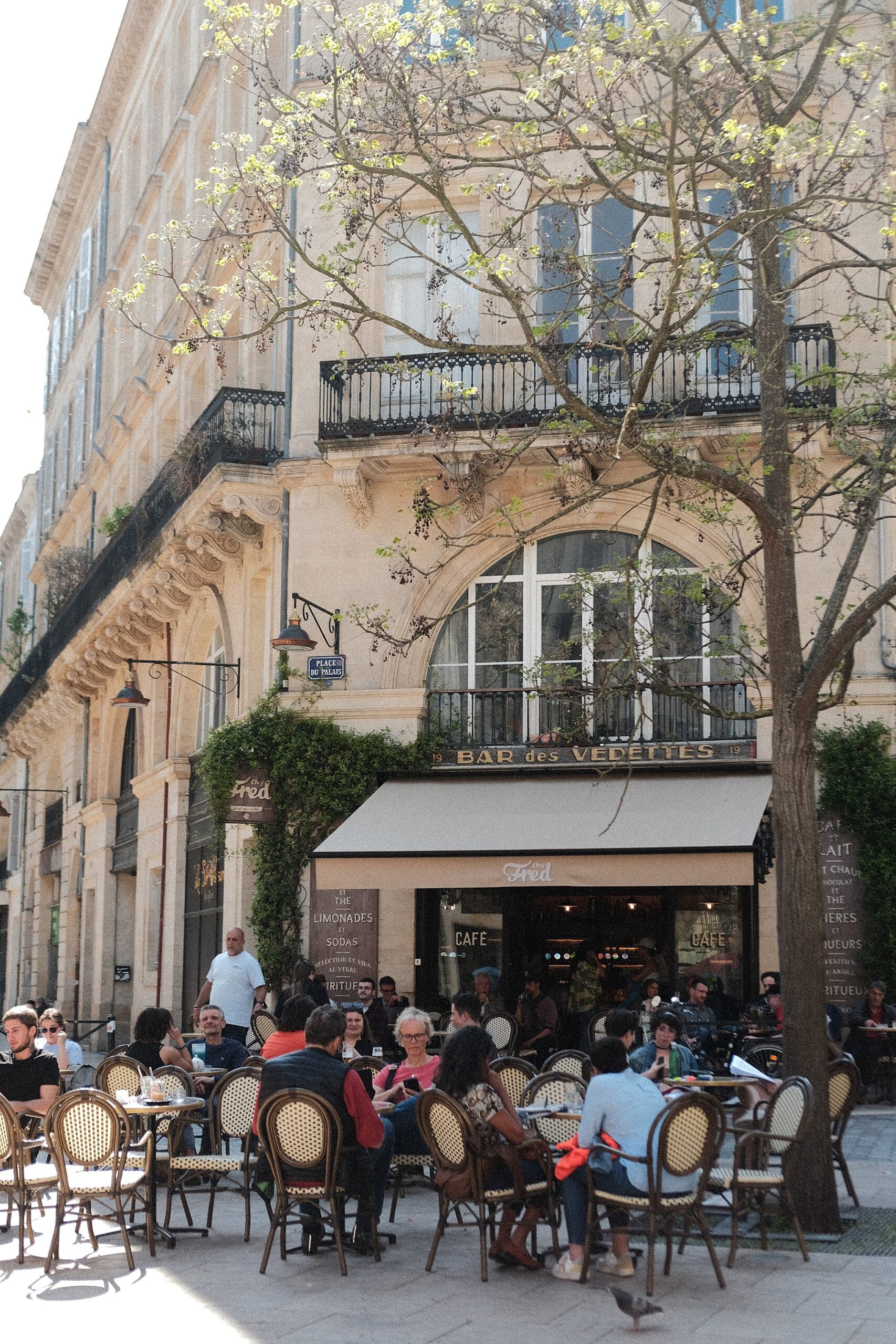
    One of the things I understood innately, and missed, was the cafe culture of France. Not just for drinking coffees, what I mean by cafe culture in France specifically is how meals, or even aperos or a cafe, are often had outdoors on a terrace, on a cobblestoned street, in a pedestrian-only area. Waiters leave you alone, you can take all the time in the world, and the point is to enjoy what you’re imbibing and think about life.

    This cafe culture experience is mostly absent in the United States. Waiters constantly come check up on you as if you’re a child that cannot be left unattended, and will often eagerly bring you the check “whenever you’re ready” as a non-too-subtle nudge to please leave so they can offer your table to the next customer. Pedestrian-only areas are exceedingly rare and often lack cobblestones or other old-world vibes.

    Why Americans appreciate French Culture

    These are things that I missed when I returned to the US. Which made me realize, it’s things that Americans perhaps appreciate as being different when they come to Europe, and to France.

    Americans love being able to drink wine or beer on the streets openly, and not being shamed for it. They love being encouraged to eat and drink their fill, to focus on the quality and deliciousness of their food instead of counting its calories, or seeing how quickly they can wolf it down. The French also love taking their time and eating outside, because they are usually on vacation. They love doing all these things because it’s not what they’re used to, it’s not the norm for the culture they come from.

    Back home in the US they will have to think about work again, since American culture is so focused on work and productivity. Much to an American’s surprise, the second question the French might ask an American tourist isn’t “what do you do for a living” but rather “What do you think of France?” or “How long are you here for? What are you planning to do?” This is because the French don’t ask each other about work too much in social situations, because it’s not as important as other things in life, such as family or quality of life.

    Americans love pedestrian walking areas, and to discover an ancient gothic cathedral around the corner. They love the architecture on the buildings, and how everything feels so old in Europe, and in France.

    On Finding Happiness Abroad

    Living long-term in Europe will invariably dullen the shine of wonder that Americans typically have of Old Europe. The gothic cathedrals all seem to resemble each other, and lack of air conditioning or other modern elements that are typical in the US might feel more important. But the key to happiness is to appreciate the elements of where you live in the present moment, and for me, that’s recognizing how living and being in France is different from the US, so that I don’t take any of those magical elements for granted and I maintain that Old European gleam.

  • Why living in France is cheaper than you think

    When I first saw the salary on a job posting for an English teacher at a University in Strasbourg, I almost passed up applying for the job. That’s because at the time, I didn’t understand why living in France is cheaper than you’d think. By American standards, the salary might seem low. But that’s because Americans have many other daily costs they need to consider, and the living costs in the United States is simply much higher. So that’s why in today’s blog post, I’m sharing why living in France is cheaper than you think.

    Rent in France is much cheaper than in the United States

    I can’t really compare rent or living costs in countries other than France or the US, so I’m just reporting on what I know here. But compared to the United States, rent in France is much cheaper. How much cheaper, exactly? Well, let’s take a look at numbeo.com, which tracks costs of living across many different areas in different countries. According to Numbeo, rent in France is, on average, 49% lower than in the United States. Conversely, this means that rent in the United States is, on average, [a whopping] 95.9% higher than in France!

    Rent in France is, on average, 49% lower than in the United States. And rent in the United States is, on average, 95.9% higher than in France.

    Numbeo.com

    With such low monthly rent, it’s no wonder that salaries are lower to accomodate for the cheaper rent prices.

    Health Insurance is much cheaper than in the US

    According to visaguide.world, the US has the most expensive healthcare in the world. The only public insurances are medicare, medicaid, and the children’s health insurance program. Medicare is only available to US nationals above the age of 65. Medicaid, meanwhile, helps support low-income populations. And finally, the children’s health insurance program covers costs for families of modest means that don’t qualify for medicaid.

    American Healthcare is expensive

    Going to any health provider is, as any American will tell you, incredibly expensive. That’s why most Americans need health insurance from a private insurer, often through their work. Obamacare does help subsidize plans further for low-income families. However, this is generally very complicated, and still very expensive regardless.

    How does France’s Healthcare compare?

    France’s health insurance system, in comparison, is a dream. And is one of main reasons why I love living in France.

    France has a universal healthcare system, which covers just about everything you’d need. While not completely free, residents only have to pay about 20-30% of the total cost of the care. That 20-30%, however, can be additionally covered with an additional private health insurance plan, which many French residents can choose from and opt to enroll in. Coming from the United States, however, I personally found that the prices were so cheap that I felt no need for an additional insurance plan. I was quite happy with the prices!

    What does this mean in Practice?

    A visit to your general care practitioner involves visiting their office during consultation hours (often in the morning) and waiting for maybe 30 minutes to an hour in their waiting room. No appointments are made unless if it’s a follow-up or important consultation. Afterwards, the cost will be 25 euros. That’s it. And since it’s subsidized, you’ll get refunded to your bank account 17 euros or so, meaning you’ve actually only paid 8 euros for the consultation. And those 8 euros is what can be covered by an additional healthcare provider, which would make the visit 100% free!

    Visiting specialists is similar, and usually costs 50 euros or 60 euros, again reimbursed by the healthcare system. Sometimes you can have a more complex checkup be completely covered, paying again only for the consultation.

    Groceries are much cheaper than you think

    Again this depends on what country you are coming from, but for the United States at least, groceries are in general much cheaper here in France. Some prices, like milk, seemed to be similar. but other prices, like rice or wine, seemed a lot cheaper at first glance. Another check on Numbeo.com confirmed my impressions. Comparing two major cosmopolitan cities, New York and Paris, I found that groceries prices are 28.3% lower than in New York.

    Grocery prices in Paris are 23.8% lower than in New York, NY

    Numbeo.com

    White bread might be $4.40 in the US, whereas it’s about 2 euros here in France. Rice could easily be $8 a kilo in New York, compared to 2.20 euros in France. A decent bottle of wine is easily $18 in the US, whereas in France it costs only 9 euros (and you can even get decent cheap wine for 3 euros a bottle!) These lower prices make sense when you consider that rent and salaries are much lower than the US.

    After all: lower salaries, = lower cost of living = lower prices.

    Restaurants are generally cheaper

    You might pay 18 euros for a decent, inexpensive restaurant meal in France (meal and drink). In the US, the price is probably comparable, but that’s BEFORE tax and tip. After tax and tip you’re more likely to pay a total of $25 for a meal, compared to the same 18 euros, which includes tax and tip already.

    Internet is much cheaper

    It depends on which provider you go with, but I pay 20 euros a month for over 200GB of data, and I get free unlimited calls and texts to the United States. When I travel abroad I think I get 25GB of data usually, unless if it’s to certain regions that aren’t really within the network. Some other networks, like Orange for instance, might go as high as 40 or 60 euros a month for a comparable high speed data plan. But that’s STILL a lot cheaper than what you can get in the United States. And it tends to be easier to switch providers and end a contract, too.

    Education is almost free

    Public Education until end of high school is free, and tuition fees for the University level at public universities (which are most of them) might be only 200 euros per year. This is quite different from the thousands of dollars that Americans need to spend each year on education. Which is why, if you know French, it’s a great idea to get your undergraduate degree or even your masters at a university in France.

    Conclusion: Living in France is Cheaper than you Think

    You might be afraid of moving to France with a salary as low as 1500 euros, 1200 euros, or even 800 euros a month. While everyone’s needs are different depending on their lifestyle, values, and responsibilities, my goal with this post is to dispel any unfounded fears. Because living in France might be cheaper than you think.

    Rent, health insurance, groceries, restaurants, internet, education, these are all why living in France can be very affordable. Of course, there are other things, like utilities, that may be a little more expensive. This explains why the French are generally a lot more energy-conscious. But overall, one have a very good quality of life even with a low salary by American standards. One final example:

    If you get a lecteur de langue anglais job, you might be earning 1300 euros a month after taxes. If you get a studio or one bedroom, you might pay 650 euros a month with utilities. With 300 euros a month for groceries, almost free healthcare, and transportation of only 25 euros a month (your university will often pay half the cost of a monthly pass), that leaves you with 300 euros a month extra. If you work as a maitre de langue, that’s 1500 euros a month minimum. And all this isn’t including if you pick up part time work as a tutor, which is what I did.

    So if you get the chance, I encourage you to forget your fears and simply move to France!

    If you like decide you want to move to France too, check out my other blog posts, like how I moved to France. Want to move but need personalized help? Check out my services page, where I can give you a personalized consultation, resume and interview help, and much more.

  • 6 Misconceptions about Moving to France and Teaching English

    There are many misconceptions that people have when they think about moving to France to teach English. I’ve found six major misconceptions that people might have about moving to France and teaching English. Here they are in no particular order:

    1. You can only move to France to work as a nanny, au pair, or teaching assistant.

    This simply isn’t true. The TAPIF (Teaching Assitant Program In France) may be more well-known, but the positions aren’t as good. They pay much lower, and you only get 8 months or so in France. You may need to supplement your income with government subsidies to get by. But some of the best English teaching jobs are at the university level as a lecteur de langue, maitre de langue, or contractuel de langue. They pay much better, are year-long programs, and you teach at the university level so your students tend to be more mature and easier to manage. You’re also paid the same amount each month, even during the summer when the university is closed. The reason for this is that the university pays you a certain total amount for the year, and divides it by 12 instead of by 10 or 9.

    2. Plenty of people speak English in Paris.

    Unfortunately, this is not true. Yes, Paris is a major cosmopolitan city full of immigrants, expats, and tourists. But it’s also full of many working French people who don’t speak any language other than French. It’s not uncommon for bus drivers to only speak French. Many of the cab drivers may speak only basic English. And if you plan to move to France, especially to Paris, you’ll need an intermediate French at minimum to handle basic operations like opening a bank account, finding and securing an apartment, signing up for internet and a phone plan, signing up for the universal healthcare they have here (social security), etc.

    3. If a university hires you, they’ll take care of all the paperwork!

    Perhaps this is true for multinational corporations, but unfortunately, it is not the case for universities that hire teachers. When I was hired by the University of Strasbourg I was given my contract, and eventually a form from the French government that gave me the right to work in France.

    That’s it.

    I then had to take these two documents, as well as a bunch of other documents like my resume, copies of my passport and diplomas, etc. to the embassy myself, along with the proper visa form, and apply for my visa myself. And they took a good month to process my visa! I had to give them my passport too, so I couldn’t travel outside of the country while they did this. There was some back and forth with the embassy as well, as they required other documents like proof of travel health insurance for the first few months I lived in France to give me time to enroll in the social security healthcare system. Eventually everything was squared away, but I had to do all the work of submitting all the necessary paperwork myself, and all the correspondence with the embassy was stressful at times.

    4. Finding an apartment will be easy!

    Finding an apartment will very much depend on what area you are living in. The most important thing is to understand how apartments are listed (apartments for rent are called location in French, which has nothing to do with the actual location of where they are situated. This confused me a lot when I was starting out!) When I got an apartment in Strasbourg, I was able to find a 1-year lease without submitting much of a deposit, and I coordinated directly with the landlord. I found the apartment on leboncoin, the craigslist equivalent in France, and I must say this website is a must-have if you’re living in France. I’ve used it so much for various things since I moved here. Finding a good apartment in Corsica, the next place where I lived, was much harder. I ended up moving twice for various reasons. But my apartment here in the Biarritz/Bayonne region was definitely the most difficult by far. I was only able to find a 10 month lease, I had to get my parents to be guarantors even though I had a stable salary that pays more than half the rent, and the only reason why I was able to see and finally get the apartment was because I submitted to the landlords all my paperwork and contacted them within 30 minutes of them posting their place. They got so many inquiries that they stopped responding to people after the first couple hours. This might impact where you apply for a job–it’s definitely better to live in a place that isn’t seasonal!

    5. French people are lazy, so it’ll be hard to get anything done.

    I don’t know how this misconception came to be, but French people are definitely not lazy. Compared to American standards, the French may work less because they have a healthier work-life balance, but that definitely doesn’t mean that they’re lazy! French people can be very productive during the week, and they will often work long hours when they need to, especially if they live in Paris. They usually reserve 1-2 hours for lunch, where they don’t work at the same time usually. There is actually a rule that states that employees cannot eat lunch at their desk, they have to leave and take a break! Whether this is actually enforced is questionable, but it shows the priorities of the French. They also like to discuss a lot amongst each other, but there’s this real fraternal atmosphere. Assigning

    6. French people can eat whatever they want, and never gain weight!

    This is definitely not true. French people who are overweight exist just like anywhere else. Compared to American standards, perhaps the plethora of different cheeses and the quality bread would suggest that the French should gain weight. But the difference here is that in general, the French are really good at portion control. Unlike American portions, French portions are always either just right, or tend to be on the smaller side. They also really care about the quality of their foods, and French food tends to be less processed than what you might find at an American grocery store. Definitely you won’t find high fructose corn syrup in all the foods, the way you’d find it in American groceries.

    Final thoughts

    So those are my 6 top misconceptions! What do you think, do you agree or disagree with them? Are there any that I missed? Let me know in the comments below! Also, if you like this content in video format, I also posted a video on my YouTube channel talking about these 6 misconceptions. Check it out below.

  • Are you an expat or an immigrant?

    The two terms are very similar, and can easily be confused. Some people don’t like the term expat, and prefer to use the word immigrant universally. Others think we should call everyone expats, and do away with the term immigrant. But what’s the difference exactly, and why do some people find the term expat problematic anyways?

    Defining expat and immigrant

    Let me first start by defining both terms. Merriam-Webster defines an expat, or expatriate, as “A person who lives in a foreign country”. While not very specific, this term has no suggestion of permanence. Let’s look at the definition for immigrant now: “a person who comes to a country to take up permanent residence”.

    That permanent residence part is key. The goal for an immigrant is to settle in a new country to take up permanent residence, often because they are trying to escape something difficult in their own home country, whether that be persecution or simply financial hardship. It’s not as dire as refugees, who often need to move suddenly and have little choice in the matter. Immigrants tend to plan their move more in advance. But nonetheless, the plan is to settle in the new country, whereas expats don’t necessarily plan to settle in their new country.

    But what’s the problem with the term expat?

    “The word expat is loaded. It carries many connotations, preconceptions and assumptions about class, education and privilege — just as the terms foreign worker, immigrant and migrant call to mind a different set of assumptions” explains Kieren Nash from the BBC. “Why are white people expats when the rest of us are immigrants?” asks Mawuna Remarque Koutonin for the Guardian, to which she answers “In the lexicon of human migration there are still hierarchical words, created with the purpose of putting white people above everyone else. One of those remnants is the word ‘expat’… a term reserved exclusively for western white people going to work abroad.”

    An updated definition for our modern times

    Perhaps that term used to hold that connotation back when travel was more expensive and less frequent, but with the globalisation of today I am of the firm belief that the term expat should not be a term reserved exclusively for western wealthy white people, nor should it ever have been.

    Dr. Yvonne McNulty, an academic from SIM University in Singapore, shares this updated view of the word. “It’s not about the colour of your skin, and it’s not about the salary that you earn…Are maids expats? Yes they are. Are construction workers in Singapore that you see on the building sites expats? Yes they are…a business expatriate is a legally working individual who resides temporarily in a country of which they are not a citizen, in order to accomplish a career-related goal (no matter the pay or skill level) — someone who has relocated abroad either by an organisation, by themselves or been directly employed by their host country.”

    The New Definition

    Fortunately, more people are joining the fight to relabel the term expat. The founder of InterNations, Malte Zeeck, had to deal with the meaning behind the term expat from day one of his website launching. “Whether someone is an expat or not doesn’t depend on origin – it’s about the motivations behind their decision to move abroad..Just calling everyone who lives abroad an expat won’t really change some political and socioeconomic realities,” he adds.

    While there are many types of expat with many different reasons to move abroad, for people that we today call expats… living abroad is rather a lifestyle choice than borne out of economic necessity or dire circumstances in their home country such as oppression or persecution,” Zeeck says. “That’s what differentiates them from refugees or economic migrants and not their income or origin. Immigrants are usually defined as people who have come to a different country in order to live there permanently, whereas expats move abroad for a limited amount of time or have not yet decided upon the length of their stay.”

    The Bottom Line

    So it ultimately should come down to your motivation of why you moved abroad. Was your intention to live in the new country indefinitely? If so, then you’re an immigrant, regardless of skin color or level of wealth. Did you move to a new country temporarily, with a time limit to your contract or without being convinced you want to stay forever? In that case, you’re an expat. It’s as simple as that. When I moved to France, it was on a contract that was 1-2 years in duration, but no longer than that.

    I didn’t know when I moved to France that I would want to stay longer. Each couple of years I revisit my question of whether to stay in France or to move elsewhere, and for now each time the answer is to stay if I can. I’ve been lucky enough to find more job opportunities that allow me to stay in France legally, and I’ve enjoyed living here enough that I don’t want to leave yet. But my impermanent nature of taking it year-to-year really exemplifies, for me, the expat experience.

    If I had moved to France because I wanted to live in France indefinitely, and that was always the plan, then I would call myself an immigrant. I have family that moved from Venezuela to Miami, to live a more stable and better life as the political and economic situation in their home country progressively collapsed. I would consider them immigrants, because they have no intention to move back to Venezuela. They’ve settled in Miami, permanently, and have created lives for themselves. And their ethnicity, skin color, or wealth has no importance on that definition.

    So let’s take back the term expat. Being an expat is perfectly fine, not everyone is an expat. Nor is everyone an immigrant simply because they left their native country. There is nothing wrong with using the term expat as long as it isn’t used an a hierarchical, othering sense.

    What are your thoughts? Do you find the term expat problematic? Has the term changed, or is it still the same? Let me know in the comments below!