• How to Teach English in France

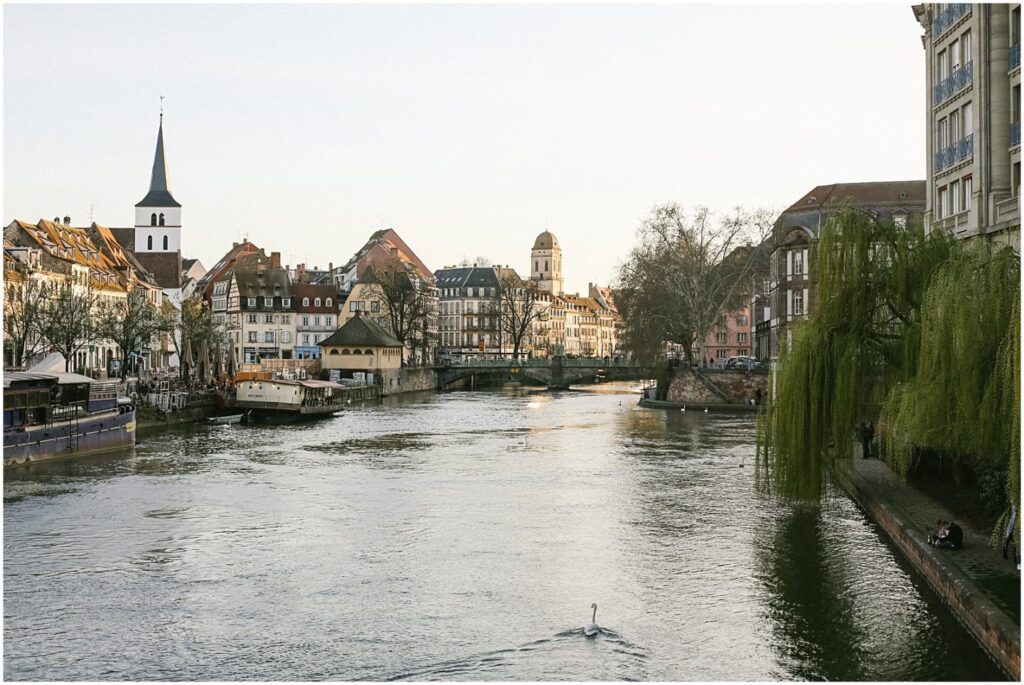
    Photo by Thibault Penin on Unsplash

    There are many misconceptions on how to teach English in France. Many websites online will tell you that you need a TEFL certificate (Teaching English as a Foreign Language). This is not actually the case, but it is very helpful and highly recommended nonetheless. You could just have teaching experience. The only real prerequisite is to have a bachelor’s degree from a university, and either be a native English speaker or be able to prove you have a near-native English level. However, not all English teaching jobs will have the same prerequisites. Here’s all you need to REALLY teach English in France:

    Get a university degree (preferably a master’s)

    To be a TAPIF (teaching assistant professor in France) you need a bachelor’s, and most other part time posts like summer teaching jobs will at least want you to have a bachelor’s degree too. Remember that the TAPIF has the lowest requirements but also is only for 7 months and pays minimum wage. This is best for single teachers new to teaching and who want to travel and get a taste of France. For a lecteur de langue (decent salary, 1-2 years full time, but paid summers off) you need to have completed 1 year of a Master’s degree, and to be a Maitre de Langue (best salary, again 1-2 years full time with paid summers off) you need to have completed your Master’s.

    Learn a bit of French

    You will be expected to communicate with the university administration in French, so this means answering emails in French and the occasional in person meetings with secretaries that will usually want you to confirm the hours you’re teaching and the classes you plan to teach for the year.

    Choose the right job and city

    This only applies for Lecteur and Maitre de Langue jobs, if you are a TAPIF they will place you where they want. The good thing about lecteur and MdL jobs is that there are usually so many during the year! In my experience the most competitive ones are in Paris, as everyone seems to want to live in Paris. But the quality of life might be best in other places, such as Strasbourg or Toulouse. It depends on what kind of personality you have and what you prefer. Do you like a big cosmopolitan city with a tiny apartment but countless restaurants, shops, museums, and things to do? Then go for a place like Paris, Lyon, or Marseille. Want a middle-cized city with still plenty to do but it’s not overwhelming? Check out Strasbourg, Bordeaux, or Nantes. Prefer the countryside with mountains? Maybe Pau is for you. There are countless countryside cities to choose from. Just make sure you’re relatively close to an airport, train, or major city in case you miss the big city!

    Get a job interview

    This involves crafting the right resume and coverletter which is easier said than done. Resumes in the US focus on actions and things you’ve accomplished, whereas French resumes tend to focus more on posts and qualifications. You’ll also want to be prepared to write some cover letters in French, which is quite a feat unto itself. Then if they like you, the next step is the interview, which may have some or all of the interview conducted only in French. This will most likely be done online via Zoom.

    Get ranked (hopefully 1st)

    Once they interview all the candidates, they rank their top five favorites or so, and then let you know what your rank is. They then offer the position to the first rank, and then go down the line if anyone turns them down. This happened to me for the first post that took me overseas to Strasbourg–I was ranked 2nd, and then they offered me the post about a month after they told me my rank because their first choice declined the position.

    Get a job offer and accept

    This is probably the easiest, and most exciting, part of the process. Once you accept, the university may ask for more paperwork, and will request work authorization from the government on your behalf. Once they have it, they will send it to you so you can submit it along with the rest of your paperwork to the French embassy closest to you.

    Move to France

    I covered all of the following in my How to Move to France post, but here it is again:

    The first step to move to France is to make an appointment with the embassy and submit all the necessary documents including your passport. They may ask for things like proof of medical insurance for the first few months you’re there, in addition to your birth certificate, job offer, work authorization, and so on. France is notorious for requiring a lot of paperwork, but not to worry–with a bit of patience usually everything works out.

    Get your Passport back with the VLS-TS Visa to allow you to move to France to work

    You will need to anticipate not having your passport for 2 weeks to up to a few months, so make sure not to make any international travel plans during that time!

    Physically Move to France with as many suitcases as you need

    For the first move it’s worth taking as much as you can and paying for those checked bags. Keep in mind though that you’ll probably be renting a furnished apartment when you arrive, which will have everything you need. 1-2 big checked bags, 1 carry on and 1 personal item should be fine.

    Rent a furnished home/apartment

    Many apartments come pre-furnished, which is an amazing concept that I wish was more popular in the US. No need to worry about furniture, linens, pillows, cutlery, kitchen appliances, you just need your suitcases with clothes and personal items.

    Get a French bank account

    This may take anywhere from 1-3 weeks. Getting a bank account is important because many other things require this. You’ll also need it for your new job to send you direct deposit payments each month.

    Get a French phone

    This will help you get an apartment if you don’t have one already, and you will need a French phone for just about everything here in France.

    Find out your classes and student levels, and start creating syllabi for each class

    1st year students (L1) will in general be more difficult to handle and less mature than 2nd year or 3rd year students (L2 and L3). This depends on students, degree, and university of course, but after the 1st year of students some students drop out, and the ones who stick with it tend to be a bit more serious about their studies. Sometimes you’ll get mixed level classes (beginners, intermediate and advanced all in one class), but normally you should get students with closer levels (like A2/B1, B1/B2, or B2/C1). If you don’t know the European CEFR level framework, definitely learn more about it before you move to France. It would help to know it well before you even start applying for jobs. After you know what your students are studying and what level they are, figure out how many classes they have during the semester and when so you can craft a syllabi with dates for homework, midterm and final exams, and so on.

    Start teaching!

    And that’s it! You’re ready to start!

    This is how you teach English in France.

  • An American Moves to France: How I Did it

    The first step to getting a job is knowing what jobs are out there and if you’re qualified. I didn’t know what jobs I’d find when I got my Masters in TESOL. All I knew was I wanted to learn more and develop my skills. I also didn’t know anything about lecteur or maitre de langue jobs at the time. So I actually found it through the job listserv of Columbia University’s Teacher’s College. It was a PDF entirely in French , without much description of the job itself. When I saw that it paid only 1500 euros a month, I thought the salary was too low (I’d later learn that since rent is much lower in France, this is actually a decent salary). But when a friend forwarded me the same job, thinking I’d be a good fit since I knew French, I took it as a sign. This would be the beginning of the beginning, of how I moved to France to teach English.

    The Application Process

    I applied to the position with a resume, copy of my masters diploma, and a cover letter end of March. The cover letter was one page in length, quite long, but in English.

    The email sent to the listserv only said the job was at a university, was full time, and listed the 3 documents needed to apply.

    The job description itself, however, was a two page PDF entirely in French. It was very confusing for me at the time, since I wasn’t familiar with Maitre de Langue positions or what 192 “TD” hours meant.

    The Interview Process

    Four days after I applied, I got an email at 3:30am asking for a phone interview later that same day. I saw the email at 630am and replied, but also mentioned I’ be free at 10am during my 15-minute break. I didn’t think she’d go for this time since it was too short and last minute. However, after teaching the first half of my morning class, as I was dismissing my students I saw her email at 9:59am agreeing for the 10am interview. While my students started shuffling out, my phone rang with an international number. I was about to have my interview.

    Our interview was very fast, only 15 minutes as promised. I had had coffee that morning so my adrenaline was in overdrive. The interview went well, I sent a thank-you email, and then I didn’t hear back for about a week. The email response didn’t provide good news, though.

    They told me I was ranked 2nd, and should their first choice turn down the position, they’d then offer it to me. But they warned me that their first choice seemed “keen” on taking up the position. Nothing would be confirmed until after April 18th though, apparently.

    On April 19th I sent the follow-up email asking if the position had been filled, since I hadn’t heard back. But I got no reply. For two weeks I heard nothing, and had assumed that I hadn’t gotten the post.

    It wasn’t until April 30th, at the end of the month, that I got an email with some good news. Their 1st place candidate declined the post, so now they were offering it to me.

    Accepting the Position and Next Steps

    Once I accepted, it was only the beginning. In 1 month I was set to get married, so my wife could in theory come with me. But I needed to get us both visas and I had NO IDEA where to start! The person who hired me directed me to their HR department and a past Maitre de Langue, Jeremy, who could help since he was American too. I had so many questions like:

    • How do I start the visa process?
    • How do I find housing?
    • What about our phones?
    • What about health insurance?
    • Any general tips for this big undertaking?

    I was lucky he was kind enough to help me with all the questions I had. Not everyone’s that lucky, though. I wish I’d known someone who could have helped me more along the way. Everyone should have a Jeremy to help them out too. That’s one of the reasons why I decided to start Move to France and Teach English. So I can lend a hand to those who need it too, if they want it, when moving to France. To check out the list of all the services I offer to help you move to France, you can look at my services page. You can also check out many of my other blog posts about moving to France.

  • Why I loved Being a Maitre de Langue

    Before moving to France, I had taught English as a Second Language (or ESL) for about seven years in the United States. So I knew the industry well from the perspective of an American living in the United States. I had no idea, however, how much I would love teaching in France as a Maitre de Langue Anglais. So I thought I’d take a moment to explain why I loved teaching in France as a Maitre de Langue Anglais.

    Comparing France to the US

    Compared to the United States, the ESL industry in France is completely different. And with good reason. The United States is one of the biggest countries in the world, with hundreds of millions of people speaking English. Thus, they would naturally have a huge supply of native English speakers who could become English teachers. France, in comparison, doesn’t have as strong of an English teaching education system as some of their neighbor European countries. As a result, there are much fewer English speakers, and even fewer native English speakers. After Brexit, the supply of native English speakers who can teach English is even lower than ever.

    Supply and Demand

    Many institutions would consider an American native English speaker a commodity if they can speak French and live in France. This is because it’s hard enough to learn French, move to France, and become a long-term resident of the country.

    The result is a simple economic study of supply and demand, and the quality of the positions reflects this reality. With a huge supply of native ESL teachers in the US, there’s a low demand for the teachers. So the positions that are available are almost always part time, and depend on school need. This means they could give you five classes for the summer but only two classes for the winter. Or they could give you no classes altogether in case something like borders close or a pandemic hits).

    Part Time is not Ideal

    This means that if you want to earn enough as an ESL teacher you must work 2-3 part time jobs. Between private language schools and university classes, you eventually might get that coveted job of full time assistant director. Part-time work comes with all the lack of benefits too: no 401k, paid leave, stability, or healthcare plan either.

    Full Time as Maitre de Langue is Much Better

    In France, however, most positions offer you complete stability for 10-12 months no matter what. You’ll earn the same each month regardless of how many students you teach or how many hours you put in. Instead, you have a quota of hours to full, per your contract. For a lecteur / Maître de Langue you’ll have 192 hours per school year, whereas a contractual have 384 hours. If you go over your quota, you can get overtime pay, but go under, and you could get in trouble.

    This means spending many hours teaching, preparing, and grading during some months (like November and March). On the other hand, your summer is still paid but completely free. Almost 3 full months paid. The way they rationalize this is that they are actually paying you less than they should each month. Instead, they pay over twelve months instead of the 9-10 months that you’re actually working.

    It’s More Work, but it’s Worth it

    385 hours is a lot of work as a contractual, I’m not going to lie. If you’re not experienced it can feel like they’re throwing you in the deep end. But 192 hours as a Maitre de Langue felt like the perfect amount of hours. This translates to only five classes to teach. 4 classes of 2 hours per class with 10 classes per semester. And 1 class of 1.5 hours per class with 12 classes per semester. If you have similar students studying similar things, you can repeat the same lesson plan for different classes, or improve on lessons as you try them out with one group to make sure they’re better for another that’s similar.

    Great Work-Life Balance As Maitre de Langue

    Combine the manageable work schedule with all the school breaks and observed holidays, and you have plenty of time to get to know locals, practice your hobbies, travel, and live. It’s a wonderful work-life balance. Which is definitely nice to have the first few months if this is your first job in France working, since you need so much time getting acclimated to the new city, country, and culture.

    So why did I love working in France as a Maitre de Langue? Because of the yearlong stability I never enjoyed in the United States, and because of the wonderful work-life balance I was able to enjoy with a work schedule that was considerable, but very manageable.

  • My Top 5 Favorite Things About Living in France

    Top 5 favorite things about living in France

    Why do I love living in France? There are so many reasons! Granted it’s not perfect, but there’s a lot to like about living in France. Which is why I’m very grateful I was able to make the move successfully. So here are my top 5 favorite things about living in France, in no particular order:

    1st Favorite thing about France: The Food

    Food is always the first thing that comes to mind for why I love living in France. So obviously I’ll mention it first as a top 5 favorite things about living in France. French food excels in its bread, cheese, wine, and sauces that use cream and butter. The French baguette, croissant, etc. are delicious staples you can get any morning at any boulangerie in France. Boulangeries are bakeries often with patisserie sweets, and they’re so important that they stayed open during the COVID-19 crisis.

    In the US I never went to a local bakery, but I do here in France. Admittedly I go more often for a special weekend breakfast than I go for baguette. Baguette goes best to sop up sauces, particularly pasta sauces, but can also be used as amazing sandwich bread. However, they go hard and stale in as little as 12 hours, so you really need to get them fresh. Then, going to a French restaurant to have a full course meal, it’s incomparable to American restaurants.

    2nd Favorite thing: Dining Culture

    In addition to the excellent food, the dining culture is also great here in France. There’s actually a law stipulating that businesses can’t let their workers eat lunch at their desk. This is to encourage workers to truly take a well-deserved break to refresh and disconnect from work. While the French seem to follow this religiously, they also practice the cultural custom of complaining about work. But at least they’re connecting with their coworkers and letting off steam.

    Lunch also involves either sitting around a table in the lunch room or going to a restaurant and sitting outside. Fast food does exist in France, but outside of major cities like Paris, it’s not as common. The French will almost never eat while walking, and take their food to go only when they need to.

    And I love this about the French. I’ve always loved taking my time to enjoy food during lunch, not rushing, and finishing a meal with coffee before getting back to work. Many Americans prefer to eat lunch at their desk while working, or barely take a lunch break at all. But I love taking my time.

    3rd Favorite thing about France: Architecture

    example of Haussman architecture
    Pascale Gueret / Getty Images

    Another one of my top 5 favorite things about living in France is the architecture. The architecture of France is definitely one of the first things I appreciate when coming to France from the US. Compared to the US, France is much richer in history, something immediately apparent with the architecture you can find here. It’s the first thing you see when you arrive in France. Haussman-style architecture in particular is famous for its big windows, balconies, and parallel lines. Also of note are the white stone, the blue tin roofs, and the small brick chimneys protruding from the roofs.

    The architecture changes to more stone, smaller, and provincial in places like Normandy and Brittany. You’ll also find pink stone with blue shutters and pastel colors in the south of France, especially in the Cote d’Azur. All of it is so beautiful and varied, yet so rich in culture and history. This is a sharp contrast from American architecture that, except for some colonial towns, were all built the same with a completely different style.

    A lot of buildings in the US were designed with cars in mind. They were built for practicality and speed of construction, without superfluous aesthetics. The brutalist style of the 1960s that inspired the construction of the Boston Government center comes to mind as a great misfortune to the city of Boston.

    4th Favorite thing: Transportation

    Trains are so convenient! And when you don’t have a car, transportation plays a major part in your daily life. Which is why I included it in one of the top 5 favorite things about living in France. While the US has Amtrak or metro service for bigger metropolitan cities, France also has a light rail system of trams that often runs above ground.

    After living in NYC for so many years, it was so nice to take the tram system in Strasbourg! Granted it doesn’t run 24 hours a day nor as frequent as trains every 3-4 minutes. Instead, the Strasbourg tram system runs every 8-12 minutes on dedicated tram lines above ground. They will either run in between car streets or share the street with cars. They also occasionally go below ground in sections as well. It runs incredibly smoothly, with no wheels, only silent electricity. And much of the rails themselves will be nestled among patches of dirt or grass. I even saw a sprinkler system to irrigate the grass the train glides over! Now talk about green travel!

    France also has a much better inter-city train system. I think the ACELA Amtrak train is the closest the US comes to high speed smooth trains. In France they have TGV trains that can make it from Strasbourg to Paris in only 2 hours time. They do this by running speeds of up to 320km/h (almost 200mph!). Centered in Paris, the TGV reaches all corners of France. From Lille to the north, to Nantes in the West, to Marseille and Bordeaux in the south and south-west.

    5th Favorite thing: Healthcare

    My final top 5 favorite thing about living in France? I’m not afraid to go to the doctor anymore! Or a specialist, for that matter. It won’t break the bank! I remember how fearful I was when I went to the dentist with my wife. It was for a much-needed teeth cleaning and to fill some cavities. I was afraid of the worst when I told them I didn’t have any insurance. So you can imagine my surprise when they sighed and said, alright, you’ll have to pay full price: 34 euros. Such a low price for a few cavities and teeth cleaning without insurance! The same thing would have cost over $400 in the United States! It was from that moment on that I knew I wouldn’t have to worry about going to the doctor anymore.

    Granted, it’s different than the US system. Even with a primary care physician, you’ll still have to come in during consultation hours and wait in line to be seen. But the social security that comes with living in France is great. You’ll get a Carte Vitale (French national healthcare card) with a chip like a credit card. It keeps your information so the doctors know what to charge you. But it also means you’ll be reimbursed 70-80% of the total cost of healthcare they provide. And the costs themselves are actually quite low! Specialists will often cost only 50 or 60 euros per visitation, and follow-ups seem to be included in this price.

    So these are my five top favorite things! What are your favorite things? Let me know in the comments below. And if you want to experience these things and decide you want to move to France, check out my other blog posts, like how I moved to France. Decided you want to move but you want personalized help? Check out my services page, where I can give you a personalized consultation, resume and interview help, and much more.

  • The 4 Best English Teaching Jobs In France

    The most important thing to know about ESL teaching jobs in France are that there are 4 main English teaching jobs you can get in France. This depends on your qualifications, student age, and amount of time you want to spend in France. In this post, I’m going to break down all four jobs, including what you need to get them.

    Teaching Assistant Professor In France (TAPIF)

    The TAPIF position is basically a Teaching Assistant position usually posted in a middle school or high school. I never did this job but I know people who did. This is the best kind of job for someone who wants to work with kids and has little knowledge of French. Also best if you have little knowledge of teaching, since it has the most basic qualifications. However, you do need a B1 level of French and the oldest age to apply is 35 years of age.

    The pay is also the lowest. But you can supplement your income with a living stipend from the government.

    The Visa Sponsorship time is also the lowest of the three (10 months instead of a full year)

    If you want the most help and the lowest commitment, this might be a good choice.

    Lecteur de Langue Anglais (Teaching Assistant at a University Level)

    For this position, you need a bachelor’s degree and some univerisites also ask for 1 year of Master’s level studies completed.

    I never filled this post but I know those who did. The requirements often include conversation hours/labs and sometimes require less content creation. You tend to have less grading and invigilation to do than a Maitre de Langue as well.

    The pay is much better than the TAPIF, but still lower than the Maitre de langue. No living stipend is available. You’ll sometimes have some transportation covered depending on the university, but not guaranteed. I’ve found this pay is usually comfortable for 1 person with a modest lifestyle.

    The visa sponsorship for this job is 1 complete year renewable once, where often you’ll finish your classes in May and have June/July/August with no work and free to travel but still receiving monthly paychecks.

    Maitre de Langue Anglais (Teacher at the University Level)

    For this position, you’ll definitely need a minimum of a Master’s level completed.

    The pay for this position is the best, since the qualifications are the highest but also the responsibilities are the greatest as well.

    The visa sponsorship for this post is the same as lecteur (1 complete year renewable once) where often you’ll finish your classes in May. You then have June/July/August off and are free to travel but still receiving monthly paychecks. Half of your transportation is also usually covered depending on the university.

    This is the position that I started with and have the most experience with.

    Enseignant de Langue Contractuel Anglais (Contractual English Teacher)

    The Contractual English teacher jobs is probably the most loosely defined, has the longest possible duration of all four options, and the most variable salary. That being said, it will always be paid just as well as a Maitre de Langue at a minimum.

    The biggest different between a contractual teacher and maitre de langue is that you’ll be teaching DOUBLE the amount of contact hours. This means being able to stay organized, responsible, and be able to manage many different classes. They will often have different ages, levels, and subject focus (Business, engineering, test prep), etc. You may also be expected to complete additional work responsibilities, such as invigilation and communal grading for high level exams, depending on the post.

    The visa sponsorship for this post can be up to three years, but it really depends on the university’s needs.

    So those are the 4 English Teaching Jobs you can get in France. They’re the easiest and most rewarding for foreigners to qualify for. Which one seems the most interesting to you and why? Let me know in the comments below. If you want to know more about one of the four jobs, feel free to contact me with your questions 🙂

  • Moving to France was the best thing I ever did. Here’s why.

    Why I moved to France

    Some people wonder why I moved to France and not some other country. But to know the answer, you only have to look at my childhood.

    I had a different experience than most. When I was five years old living in Virginia, my family moved to the suburbs of Paris, France. Three years turned into six years, and I developed a love for the country.

    I met nice French neighbors who let me have sleepovers. I learned to bike in the lush French forests. Sunday mornings I’d go to our local boulangerie down the street for fresh baguette and croissants. I watched French TV and absorbed a Parisian accent and French vocabulary.

    I was sad when I had to leave France at the age of 11 and say goodbye to all my friends and cultural understanding. When I finally moved back to the US, I studied Business, but always kept one foot in French cultural activities. I joined a language learning club while studying in Boston, where I taught French for free. When I did my master’s at Columbia, I joined the French culture club, where we organized French cultural events.

    I always felt like I had this unique set of skills and resources that were underappreciated in the US–I could speak almost fluent French, after all. I also knew a lot about French culture and the French people. When I got my first couple jobs out of college, all that seemed to matter was my Spanish ability when I took the few Spanish-speaking calls in my customer service job.

    It should come as no surprise then that when an opportunity came for me to work in France, I jumped at it. It wasn’t just that my skills and talents were underutilized. I genuinely missed France, speaking French, eating French food, and walking French streets. I also felt the US didn’t resonate with me as much as it used to.

    So here are the main reasons why I moved to France to Teach English:

    To Realize my Full Potential

    I had this cultural understanding I absorbed as a child, and a decent French fluency, that I wasn’t using. So I decided to become an ESL teacher and taught English for a couple years on the east coast. I had very few French students, however. So when the opportunity came to move to France and teach English, combining my career with my love of French things made sense.

    To Escape the Political Climate

    This coincided with a bit of alarm in where the United States was headed at the time. The difference between France and the US was already stark for some institutional things like universal subsidized healthcare and a lack of regular mass shootings. But when Hillary Clinton lost to Donald Trump in 2016, the increasing polarization of both parties was clear, and I felt (along with many others) that it was the right time to leave the US–at least for a little while.

    Every day there seems to be another story on the news that vindicates my decision to move to France and teach English. Sometimes I have to pinch myself that I’m here, living this dream life. It’s not perfect, but I love French life and culture.

    To Teach English

    I also love teaching English. The joy I get from seeing the lightbulb turn on in a student’s mind, or from knowing the answer to a question they ask and then explaining it quickly and efficiently in a way that lets them understand and learn instantly, is very satisfying for me.

    To Discover a New Culture

    Getting paid summers off is great too. This is when I get to travel the most, and traveling in France is so easy when you want to see other parts of Europe. You get new history, architecture, cuisine, and language after a short bus/train/plane ride away, which simply doesn’t exist in the US!

    To Travel More Easily

    I knew that once I was in Europe, it would be a lot easier to travel from place to place with their train system. Flights would also be a lot shorter, and would take me to countries with much more varied languages, culture, and topography than in the US.

    To Enjoy Great Food and Wine

    I remembered the food being so good in France when I lived here. Now that I enjoy wine, it’s a great new thing to enjoy at a much more affordable price than what’s available in the US. The quality of food and wine in France is unparalleled.

    To Make a Difference

    Most importantly, I chose the teaching profession to make a difference: to help students discover a new culture and inspire them to want to learn the language and maybe travel to an English-speaking country.

    In Short: This is Why I Moved to France to Teach English

    • To have an experience of a lifetime.
    • To grow in my profession
    • To develop the skills I already had
    • To challenge myself
    • To make a difference,
    • To travel,
    • To enjoy life by eating good food and having good wine.
    • To meet new people, and
    • To live.

    This is why I moved to France to Teach English.

    If you want to Move to France and Teach English too, check out my services tab, where I can help you every step of the way. Or check out my blog posts and learn more on your own!